A new employee should not spend the first day waiting for documents, access, tools, or basic instructions. Many HR teams in Nepal still manage onboarding through WhatsApp messages, Excel sheets, paper files, and last-minute reminders, which makes small setup tasks easy to miss.
A clear employee onboarding checklist helps HR prepare key steps before the joining date, support first-day setup, guide managers, and track the first 90 days. The process becomes smoother for HR, clearer for managers, and more welcoming for the new employee.
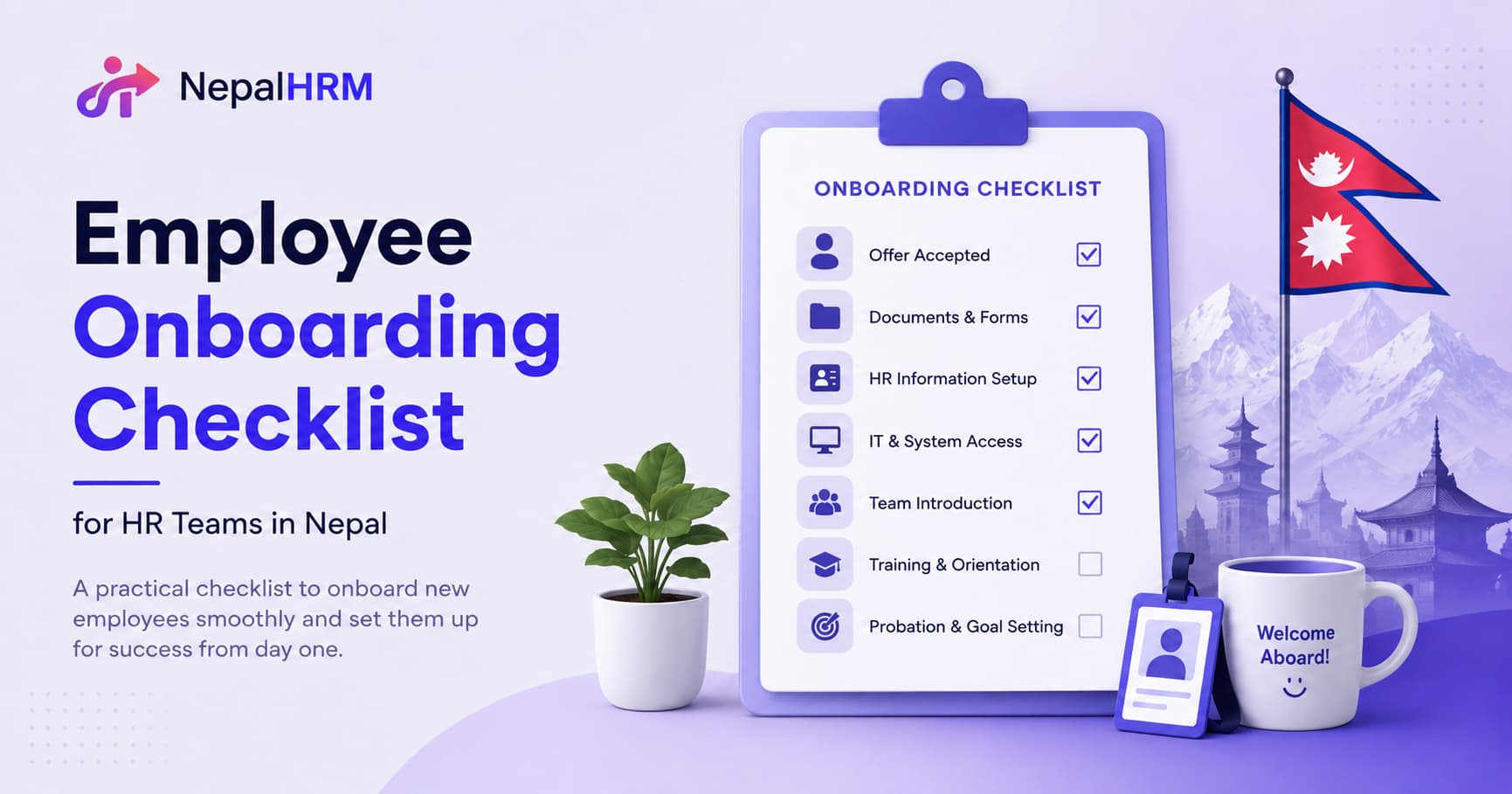
An employee onboarding checklist is a step-by-step list that helps HR prepare everything a new hire needs before and after joining. The checklist usually covers pre-joining tasks, first-day setup, role guidance, company policies, work tools, manager check-ins, and early progress reviews.
A checklist keeps onboarding clear for HR, managers, and employees. HR teams can reduce missed tasks, managers can support the new hire better, and employees can start with less confusion.
Why Do HR Teams in Nepal Need an Onboarding Checklist?#
HR teams in Nepal need an onboarding checklist when joining tasks depend on scattered files, chat messages, paper forms, or memory. A structured checklist helps HR prepare employee records, documents, attendance access, salary details, and manager tasks before the employee starts work.
Without proper planning, HR may collect details late, miss access setup, forget policy explanations, or leave managers unprepared. Small gaps can make the first few days confusing for a new employee and create extra follow-ups for HR.
A clear onboarding process creates a better first impression. New employees understand their role faster, HR teams stay organized, and managers get a simple way to support the person from the beginning.
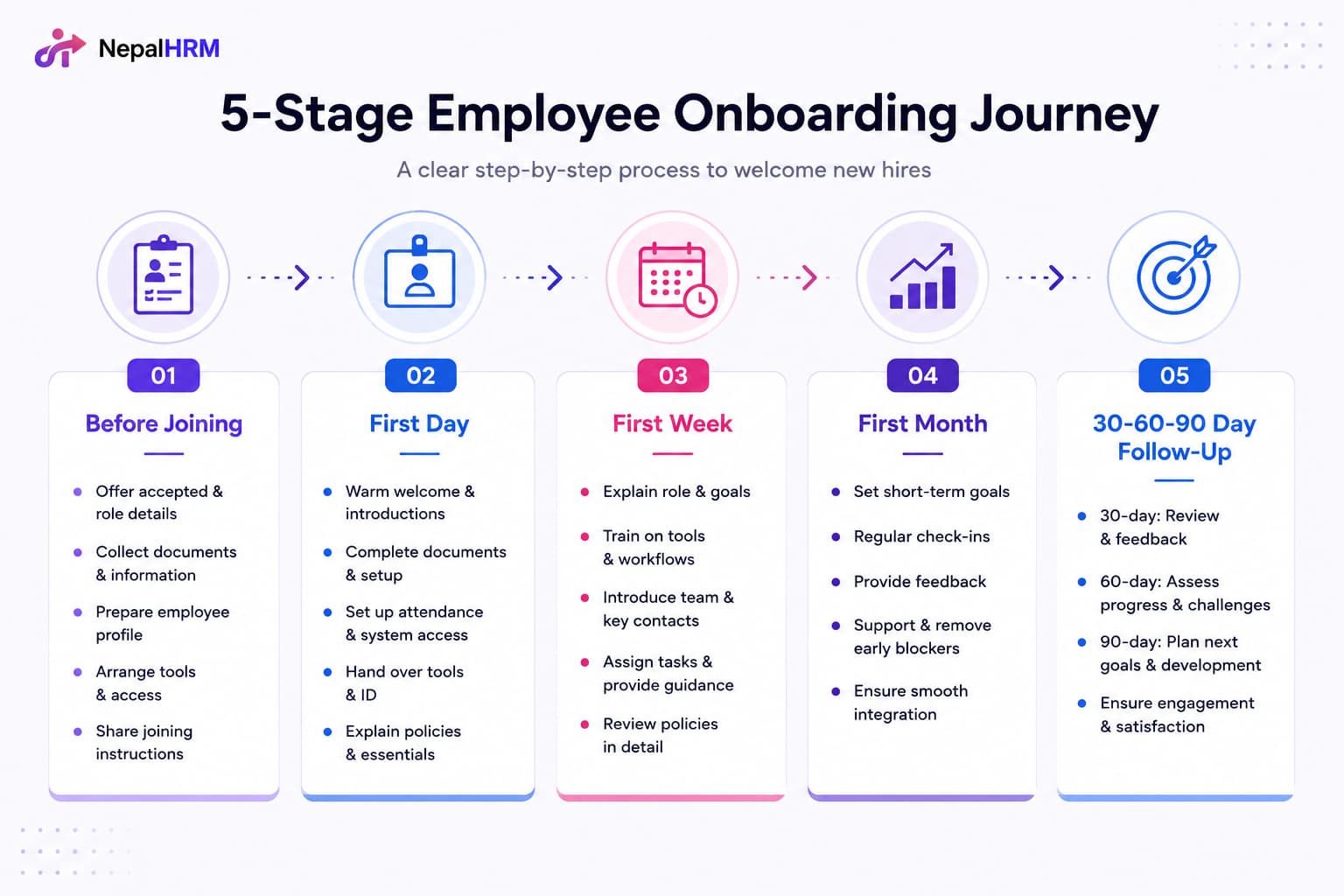
Employee onboarding should cover the full journey from offer acceptance to the first 90 days. Each stage helps HR prepare the right setup, guide the new hire, and track early progress without rushing everything into the first day.
Pre-joining preparation helps HR complete the basic setup before the joining date. Early preparation reduces last-minute pressure and gives the new employee a clear start.
HR checklist before joining:
Send the offer letter or appointment letter.
Confirm the joining date, job title, salary, and reporting manager.
Share a welcome email with first-day instructions.
Collect identity documents, PAN details, bank details, photo, and emergency contact.
Prepare the employment agreement and policy documents.
Create the employee profile in the HR system.
Prepare email access, laptop, ID card, workspace, and required tools.
Inform the manager and team about the joining date.
First-day onboarding should make the employee feel welcomed, informed, and ready to begin. HR should explain the basics, complete pending setup tasks, and introduce the people the employee will work with.
HR checklist for the first day:
Welcome the employee and explain the day's schedule.
Introduce HR, the manager, team members, and buddy if assigned.
Explain office time, attendance rules, holidays, and leave process.
Complete pending documents and signatures.
Set up biometric, web, or mobile attendance access.
Hand over laptop, ID card, email access, and required tools.
Explain employee self-service, leave requests, and payslip access.
Share company handbooks and main communication channels.
During the first week, the new employee should understand the role, team workflow, tools, and short-term expectations. A simple weekly plan helps the employee start work without feeling overloaded.
HR and manager checklist for the first week:
Explain role responsibilities and first-week goals.
Share the team workflow and reporting process.
Train the employee on HR software, attendance, email, and internal tools.
Assign simple tasks, shadowing sessions, or guided practice work.
Review company policies and code of conduct.
Explain leave request, attendance correction, and document update process.
Schedule a manager check-in before the week ends.
Confirm employee records, attendance access, and salary details are complete.
HR and manager tip: Give small and clear tasks during the first week. Early tasks help the employee understand the work without unnecessary pressure.
The first month should focus on comfort, role clarity, and early performance. HR and managers should check whether the employee understands daily tasks, company policies, tools, and team expectations.
First-month checklist:
Review the employee's first-month progress with the manager.
Check whether the employee needs more training or support.
Confirm attendance, leave, and salary records are correct.
Review assigned assets and system access.
Ask the employee for onboarding feedback.
Share goals for the next month.
Update the employee profile if any details have changed.
A 30-60-90 day follow-up helps HR and managers track progress after the first month. The plan gives the employee enough time to learn the role, build confidence, and show early performance.
30 days: Check comfort and clarity. Review role understanding, tool use, team fit, and basic task progress. HR should also check document status, attendance records, and training gaps.
60 days: Review progress and support needs. Check work quality, task ownership, communication, and manager feedback. The employee may need clearer goals, extra training, or more support from the team.
90 days: Review probation and next goals. Review probation progress, performance, long-term fit, and next steps. HR and managers should record feedback and plan future goals clearly.
Keep Every Onboarding Step Organized
NepalHRM helps HR teams keep employee profiles, documents, attendance setup, assets, and onboarding tasks connected from the start. Start free and give every new hire a clearer first day.
Documents HR Should Collect During Onboarding in Nepal#
HR teams should collect important employee documents early to avoid delays in employee records, salary setup, attendance access, and internal approvals. The final document list can vary by company policy, industry, and job role, so HR should confirm internal requirements before onboarding starts.
Common documents to collect:
Citizenship copy or other identity document
PAN details
Bank account details
Passport-size photo
Emergency contact details
Academic certificates, if required
Experience letters, if required
Signed offer letter or appointment letter
Employment agreement
Company policy acknowledgment
Role-specific documents, if required
Important Note— This checklist gives general HR guidance, not legal advice. Companies should confirm required documents with their internal HR, finance, or compliance team.
Smooth onboarding works best when everyone knows their role. HR prepares the setup, managers guide the work, and employees complete their part on time.
HR should collect documents, create the employee profile, set attendance access, prepare salary details, assign assets, and explain company policies. HR should also track onboarding progress so no important task gets missed before or after the joining date.
A clear HR setup helps the employee start with fewer questions. It also helps finance, admin, and managers use the same updated employee details from the beginning.
Managers should explain role expectations, assign first-week tasks, introduce team workflows, and give early feedback. A manager's guidance helps the new employee understand what good work looks like and how the team works every day.
The first few days should not feel like guesswork for the employee. Clear instructions, simple tasks, and regular check-ins help the employee build confidence faster.
Employees should submit documents, learn company rules, ask questions early, and complete first-week tasks. A new employee should also share feedback if any access, tool, or information is missing.
Onboarding becomes easier when the employee stays active in the process. Timely document submission and open communication help HR and managers finish setup without delays.
Employee onboarding mistakes can make a new hire feel confused, ignored, or unprepared. HR teams can avoid most problems by planning the first day, preparing important setup tasks, and checking progress after the employee joins.
A new employee should know where to go, whom to meet, and what to expect on the first day. Without a simple first-day plan, the employee may sit idle, wait for instructions, or feel unsure about the company.
HR should prepare a clear schedule that covers welcome steps, introductions, document work, attendance setup, and basic policy guidance.
Late document collection can delay employee records, salary setup, attendance access, and internal approvals. Repeated document follow-ups also make the process feel messy for the employee.
HR should request key documents before the joining date and send the full list in one clear message.
Attendance setup should not happen after the employee has already started work. Missing punch records, late device access, or unclear attendance rules can create confusion during the first salary cycle.
HR should prepare biometric, web, or mobile attendance access before or on the first day.
Incomplete salary details can create confusion for both the employee and the finance team. Missing PAN details, bank information, joining date, or salary structure can slow down the first pay cycle.
HR should confirm salary records early so finance can process salary with fewer corrections.
New employees cannot understand every policy, tool, and process in one day. Too much information at once can make onboarding feel tiring instead of helpful.
HR should explain only the essentials on the first day and spread detailed training across the first week.
Without manager support, the new employee may not understand role expectations, priorities, or team workflow. The employee may also hesitate to ask basic questions.
Managers should schedule a short check-in during the first week to answer questions, review early tasks, and explain what good work looks like.
Onboarding should not end after the first week. HR and managers still need to review comfort, training needs, performance, probation progress, and next goals.
A 30-60-90-day follow-up helps the company identify problems early and gives the employee a clear path forward.
Laptops, ID cards, phones, access cards, and other company items can become hard to track without proper records. Missing asset records can create confusion during replacements, transfers, or exits.
HR should record assigned assets, handover dates, conditions, and return rules from the start.
An employee onboarding checklist helps HR teams give every new hire a clear and organized start. A good checklist covers pre-joining documents, first-day setup, attendance access, salary details, assets, training, manager check-ins, and first 90-day progress.
NepalHRM helps businesses keep onboarding and daily HR work connected. HR teams can manage records, documents, attendance, leave, assets, and reports from one place, so new employees start with clarity and HR teams avoid repeated manual work.
An employee onboarding checklist is a step-by-step list that helps HR teams prepare everything a new employee needs before and after joining. The checklist usually covers documents, attendance access, salary details, tools, policies, training, and manager check-ins.
An employee onboarding checklist should include pre-joining document collection, first-day setup, attendance access, salary details, tools, role guidance, company policies, manager check-ins, and 30-60-90 day follow-ups.
HR teams in Nepal commonly collect a copy of citizenship or identity documents, PAN details, bank details, a passport-size photo, emergency contact details, a signed offer letter, an employment agreement, and a policy acknowledgment. The final list can vary by company policy, job role, and industry.
HR should confirm the joining date, collect documents, create the employee profile, prepare attendance access, set up tools, inform the manager, and share the first-day plan. Early preparation helps the employee start work without confusion.
Employee onboarding can start before the joining date and continue for the first 30 to 90 days. The first week helps the employee understand tools and tasks, while the 30-60-90-day plan helps HR and managers track progress.
Onboarding is important because new employees need to understand their role, company policies, attendance rules, leave process, and team workflow. A clear onboarding process also helps HR teams avoid missed documents, delayed setup, and repeated manual follow-ups.
HR software helps by keeping employee records, documents, attendance access, assets, and onboarding tasks in one place. It reduces scattered files and helps HR teams track what has been completed.
Yes, NepalHRM helps HR teams manage employee records, documents, assets, attendance, leave, reporting lines, and onboarding-related tasks from one platform. It keeps new hire details connected with daily HR work after the employee joins.
Join hundreds of Nepali businesses that have already moved from manual HR to NepalHRM. Your team deserves better than Excel. Your employees deserve better than WhatsApp approvals.