Compliance10 min read
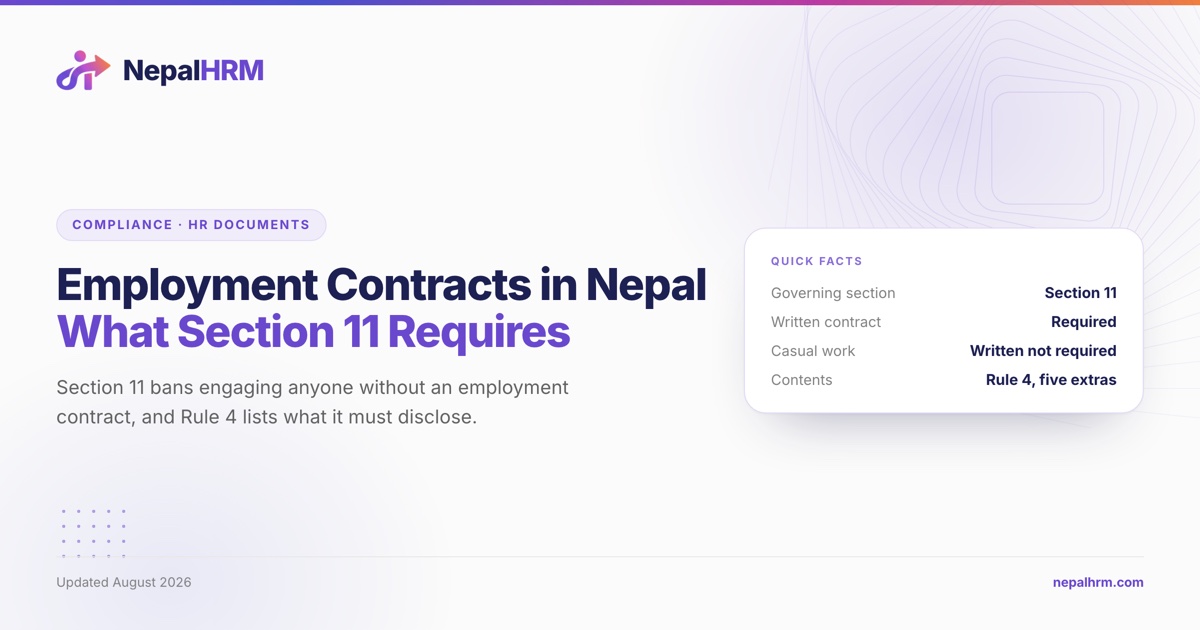
Employment Contracts in Nepal: What Section 11 Requires
Section 11 bans engaging anyone without an employment contract, and Rule 4 lists what it must disclose. What the law requires, and what happens when you skip it.
Read moreSimple guides on HR, payroll, attendance, leave, compliance and employee management for Nepali businesses.
Section 11 bans engaging anyone without an employment contract, and Rule 4 lists what it must disclose. What the law requires, and what happens when you skip it.
Read more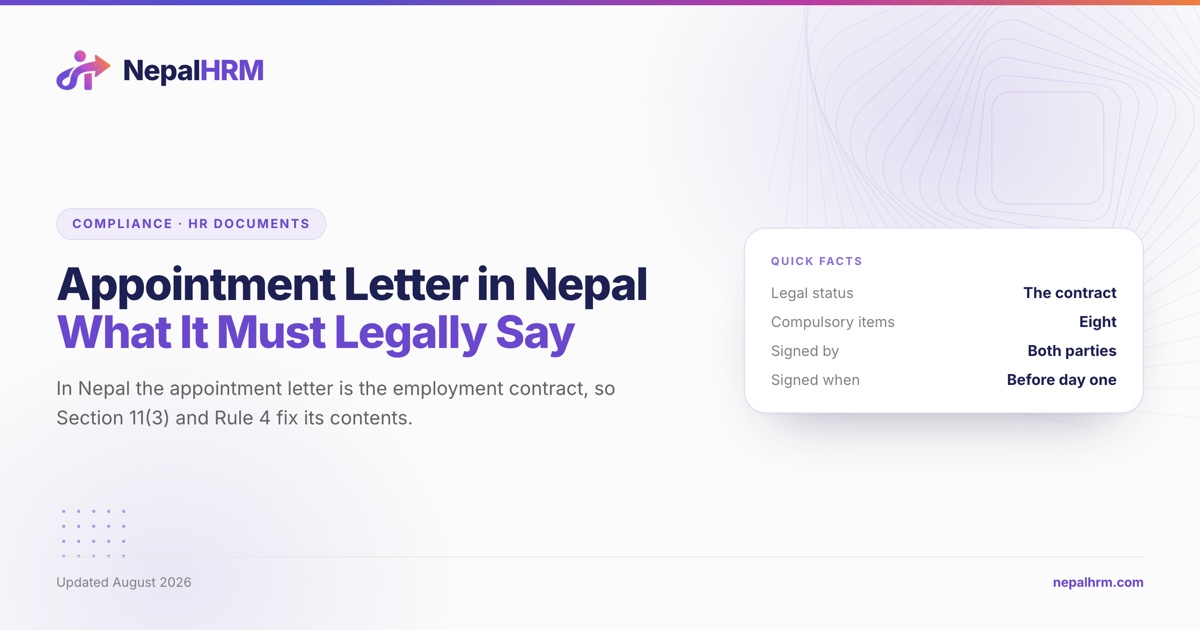
In Nepal the appointment letter is the employment contract, so Section 11(3) and Rule 4 fix its contents. The eight compulsory items, and the four that get missed.
Read more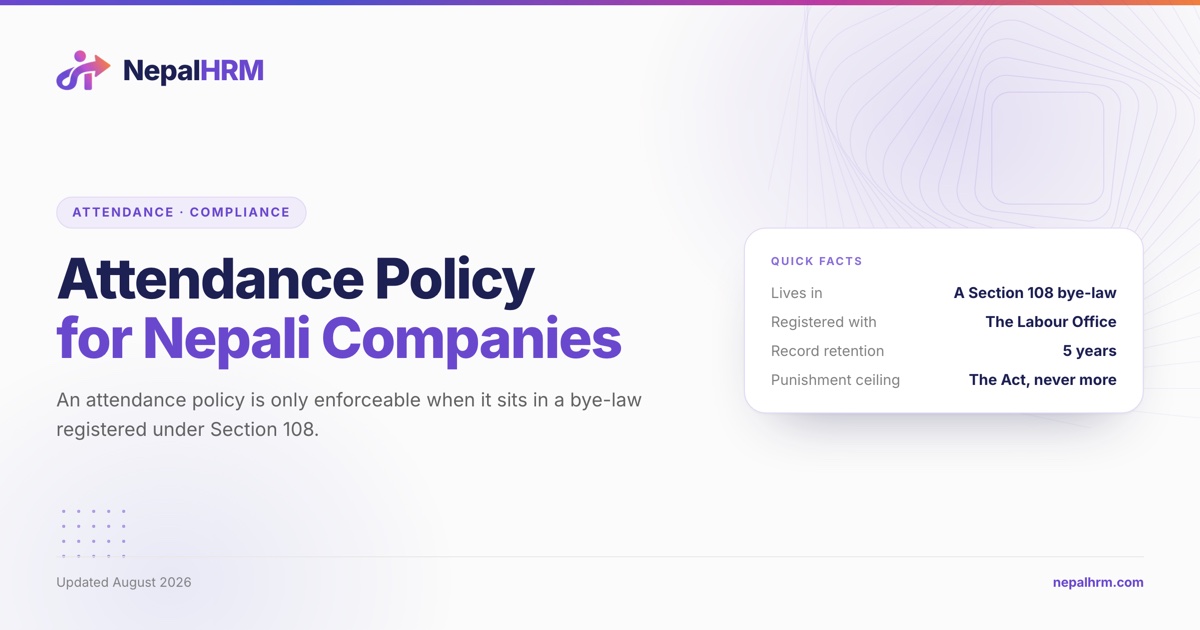
An attendance policy is only enforceable when it sits in a bye-law registered under Section 108. Twelve clauses that belong in it, and four that never should.
Read more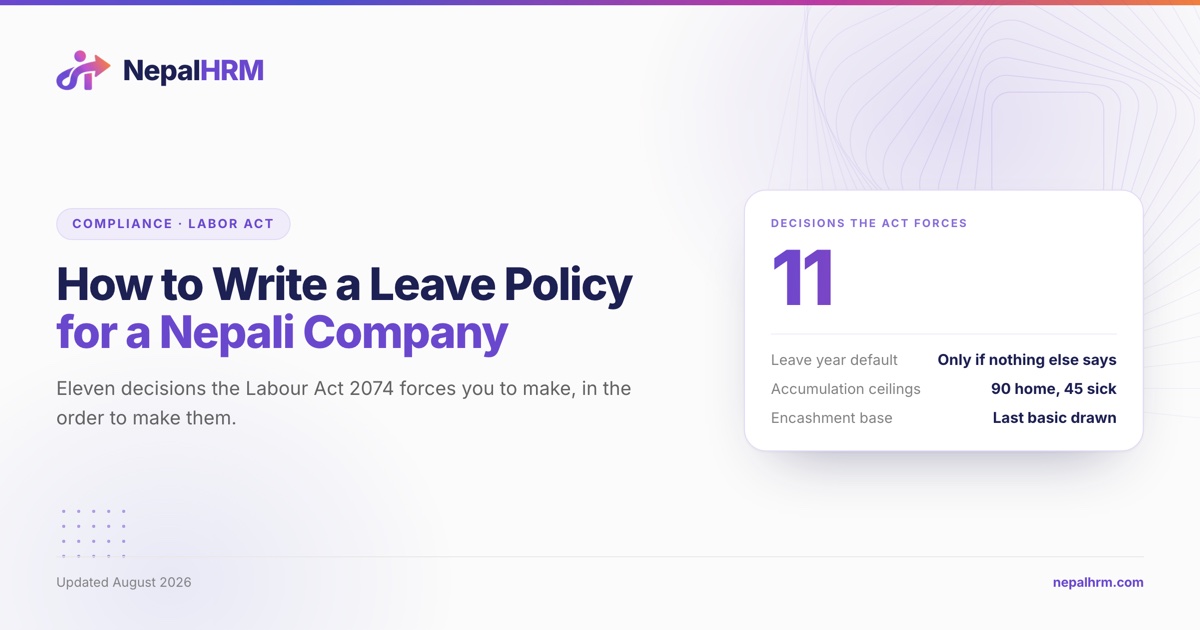
Eleven decisions the Labour Act 2074 forces you to make, in the order to make them, from which leave year applies to what happens above the accumulation ceiling.
Read more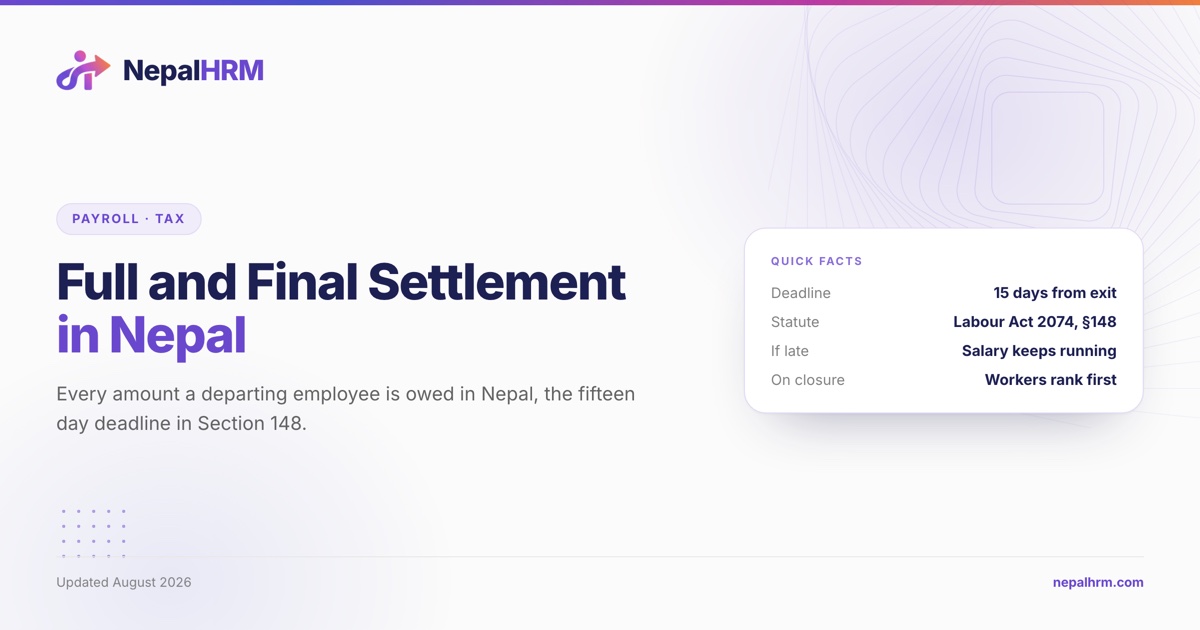
Every amount a departing employee is owed in Nepal, the fifteen day deadline in Section 148, and the penalty that keeps the salary running if you miss it.
Read more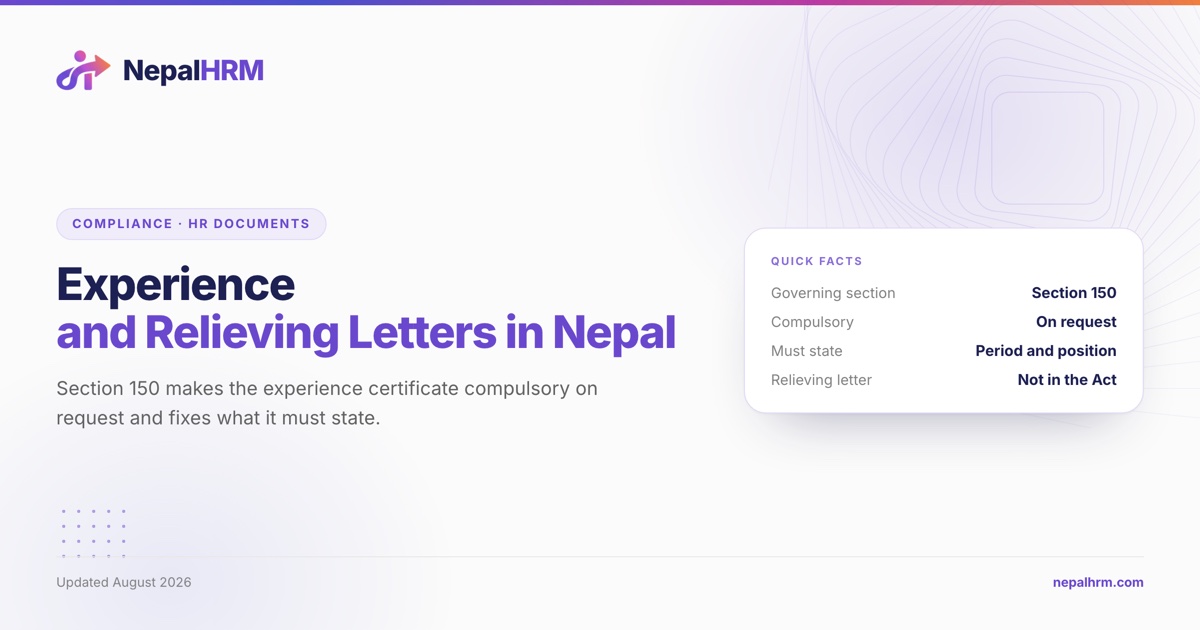
Section 150 makes the experience certificate compulsory on request and fixes what it must state. The relieving letter is not in the Act at all. What that changes.
Read more
eTDS is the electronic TDS statement every withholding agent lodges with the IRD within 15 days of month end. What goes in it, how it is submitted, and the late fee.
Read more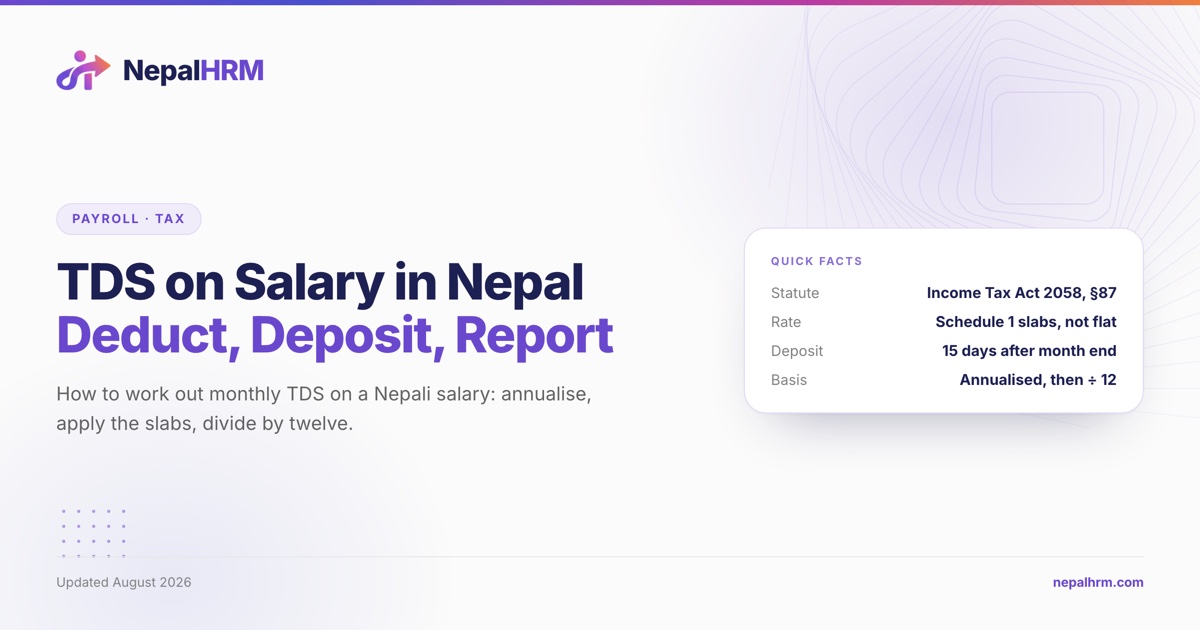
How to work out monthly TDS on a Nepali salary: annualise, apply the slabs, divide by twelve. Plus the deposit deadline and what the employer owes if it skips it.
Read moreWe write these guides while building payroll and attendance for Nepali companies. Put the advice to work on your own team, free for the first 10 employees.