compliance
Writing an Attendance and Leave Policy for Nepal
Section 38 lists nine lawful deductions and a late-in fine is not one of them. What a Nepali attendance and leave policy can enforce, and what it cannot.
By NepalHRM Team11 min read
Every NepalHRM article tagged #compliance.
Section 38 lists nine lawful deductions and a late-in fine is not one of them. What a Nepali attendance and leave policy can enforce, and what it cannot.
The Labour Act 2074 is a floor, not the whole floor plan. Six statutes govern a Nepali employment relationship, and the labour audit form asks about four of them.
The government's 2083 notice runs to 34 days. The Labour Act obliges a private company to give 13. Here is how to pick yours and publish a calendar that holds.

A device proves a body reached the reader. A phone check-in proves a phone reached a boundary. How to pick per role, and what each one costs you in practice.
The Labour Act 2074 never mentions an offer letter. That silence decides what one can and cannot do, when it becomes binding, and how to withdraw one safely.
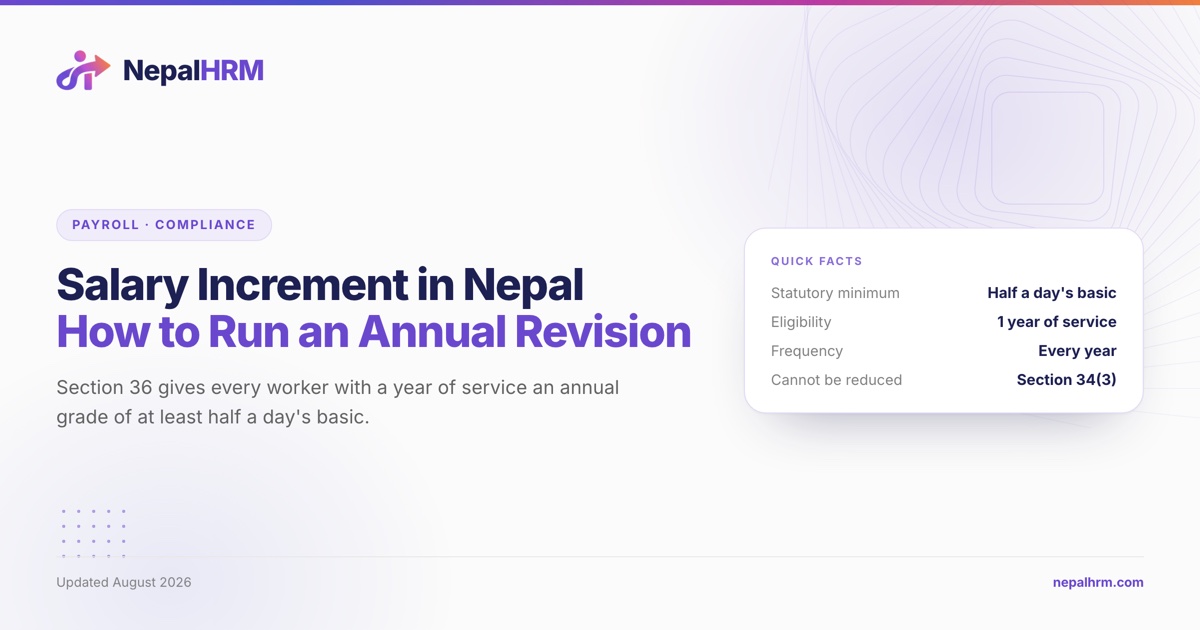
Section 36 gives every worker with a year of service an annual grade of at least half a day's basic. Here is the floor, the real cost, and the run order.
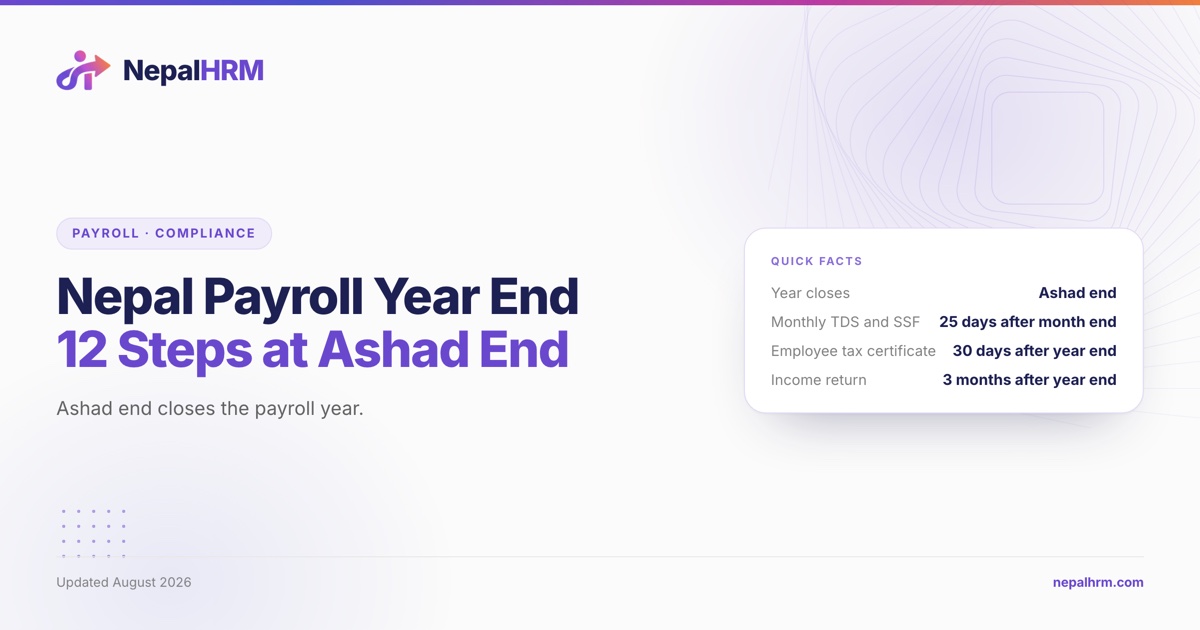
Ashad end closes the payroll year. Twelve steps, each with the section that requires it and the date it falls due, from the final run to the income return.
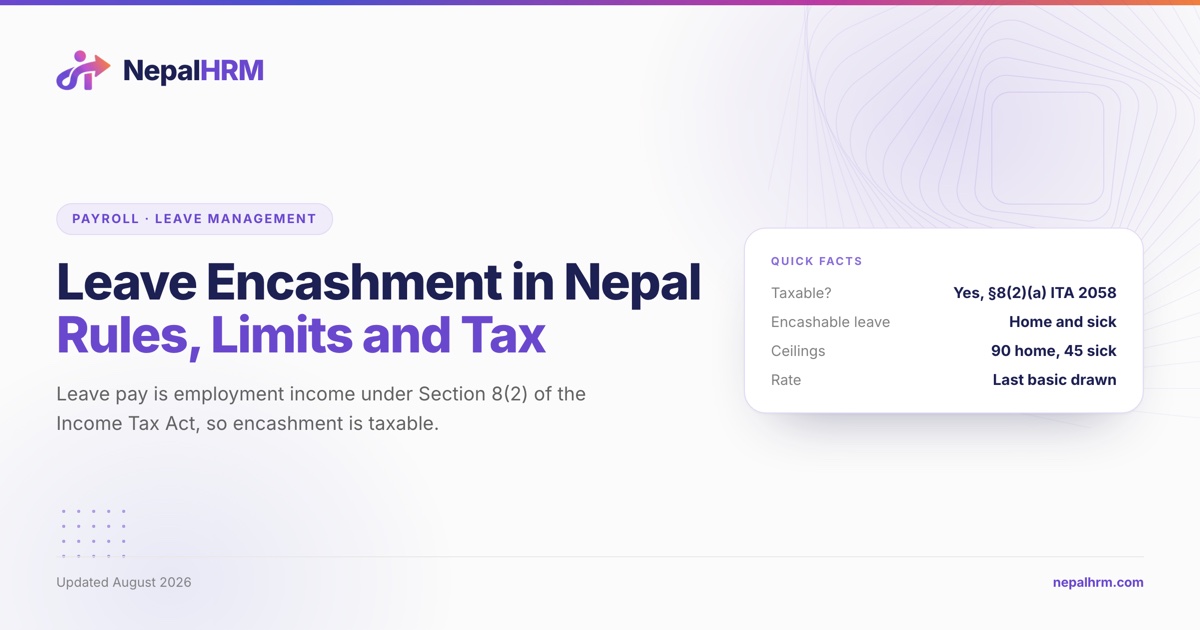
Leave pay is employment income under Section 8(2) of the Income Tax Act, so encashment is taxable. What is encashable, at what rate, and why timing matters.
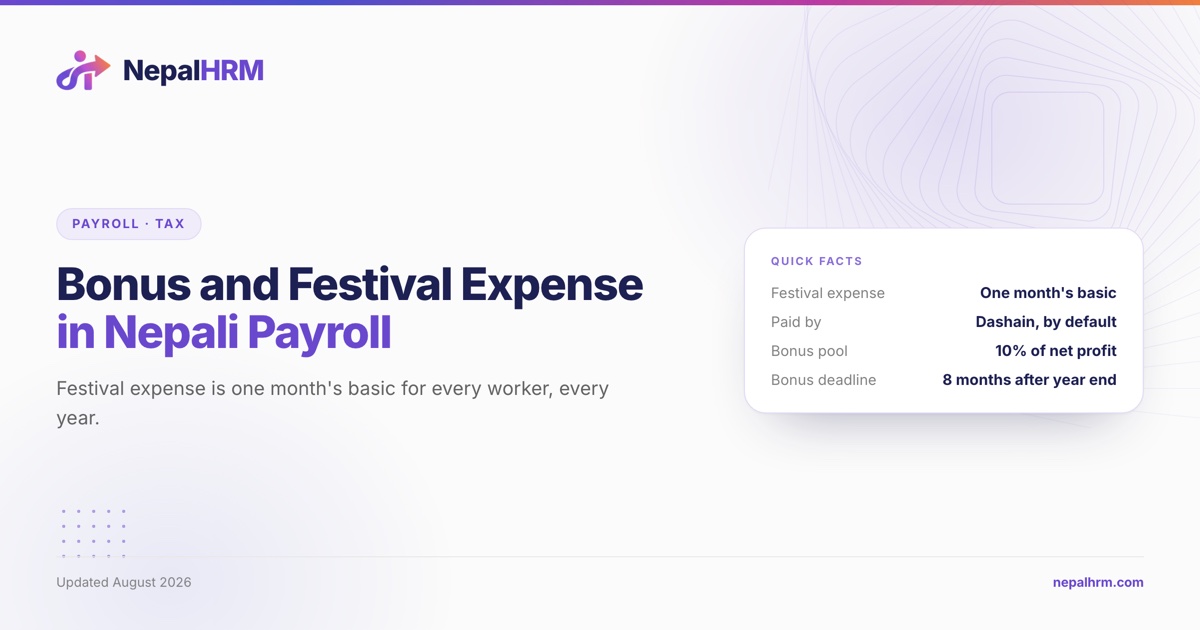
Festival expense is one month's basic for every worker, every year. Bonus is 10% of net profit, only if you made one. Two obligations, two statutes, two deadlines.
The Labour Act 2074 has no shift chapter and no statutory night premium. What actually binds a roster, and where a night allowance gets its legal force.
Why the basic figure decides almost everything on a Nepali payslip, what the 60% convention really is, and how gross becomes in-hand pay. With worked numbers.
A salary certificate is not a payslip and the Labour Act never mentions it. What banks and embassies actually check on one, and the eleven lines it needs.
Your SSF balance lives with the Fund, not with your employer. The contributor portal, the SSF Nepal app, and what to do when the number does not match your payslips.
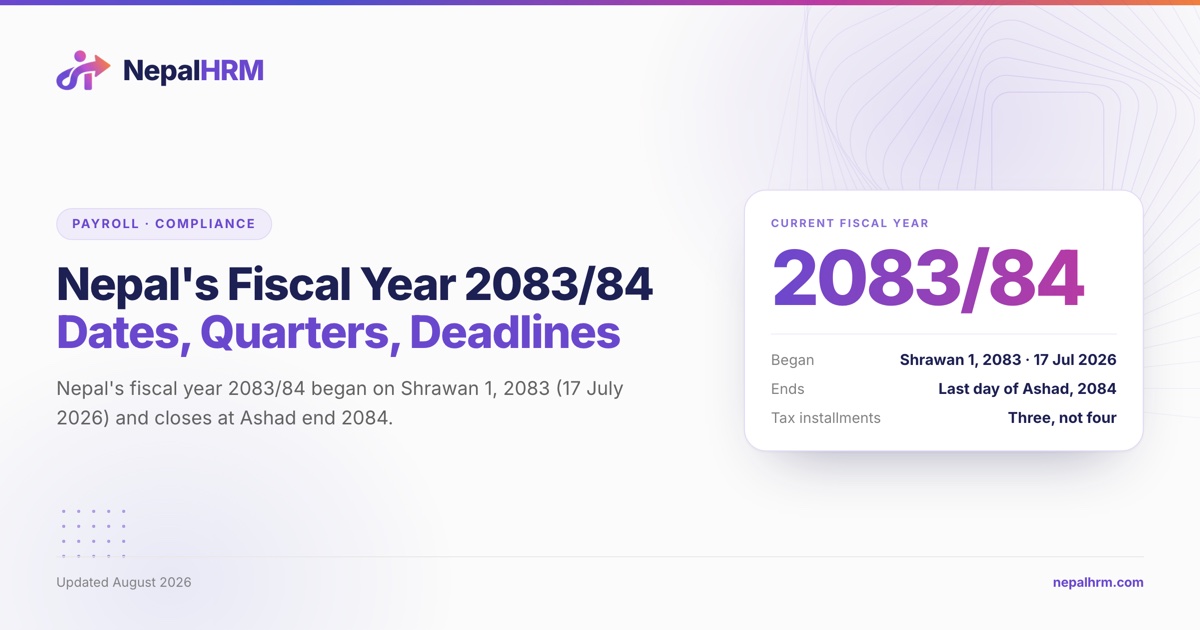
Nepal's fiscal year 2083/84 began on Shrawan 1, 2083 (17 July 2026) and closes at Ashad end 2084. The dates, the quarter question, and the deadlines that follow.
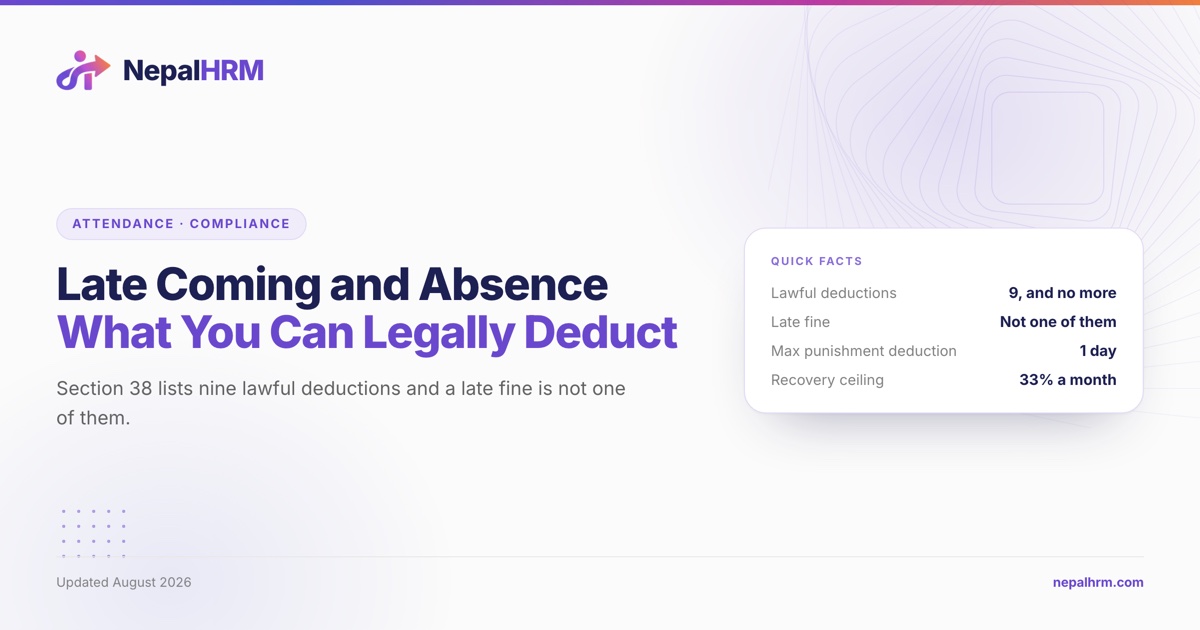
Section 38 lists nine lawful deductions and a late fine is not one of them. What the Labour Act 2074 actually allows against lateness, absence and early exits.
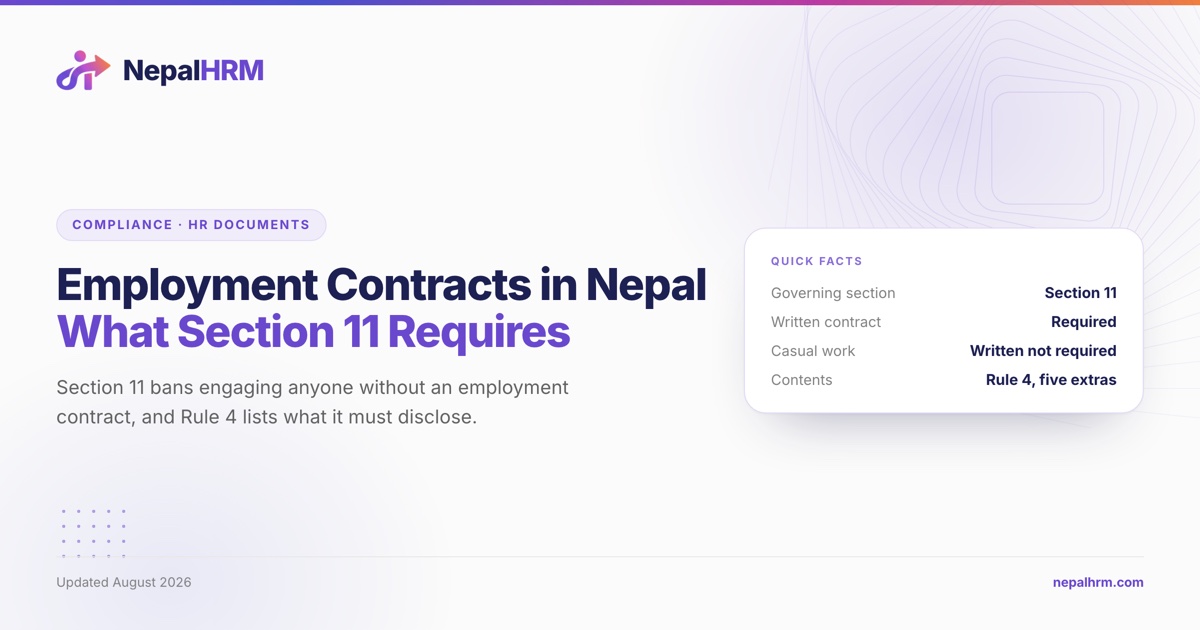
Section 11 bans engaging anyone without an employment contract, and Rule 4 lists what it must disclose. What the law requires, and what happens when you skip it.
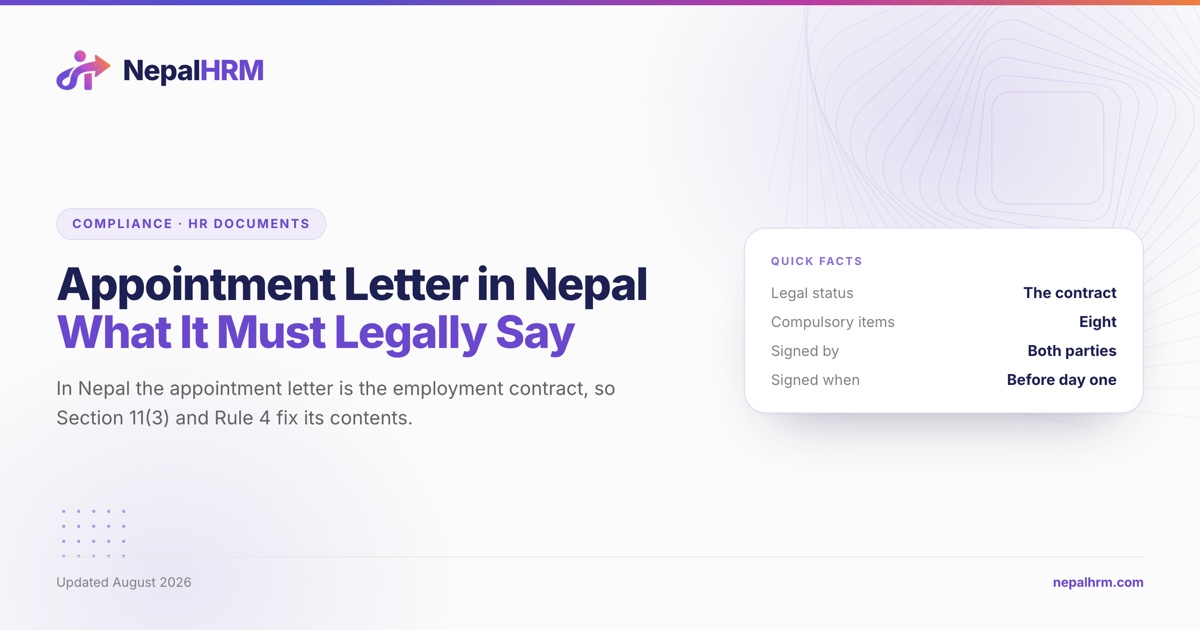
In Nepal the appointment letter is the employment contract, so Section 11(3) and Rule 4 fix its contents. The eight compulsory items, and the four that get missed.
An attendance policy is only enforceable when it sits in a bye-law registered under Section 108. Twelve clauses that belong in it, and four that never should.
Eleven decisions the Labour Act 2074 forces you to make, in the order to make them, from which leave year applies to what happens above the accumulation ceiling.
Every amount a departing employee is owed in Nepal, the fifteen day deadline in Section 148, and the penalty that keeps the salary running if you miss it.
Section 150 makes the experience certificate compulsory on request and fixes what it must state. The relieving letter is not in the Act at all. What that changes.
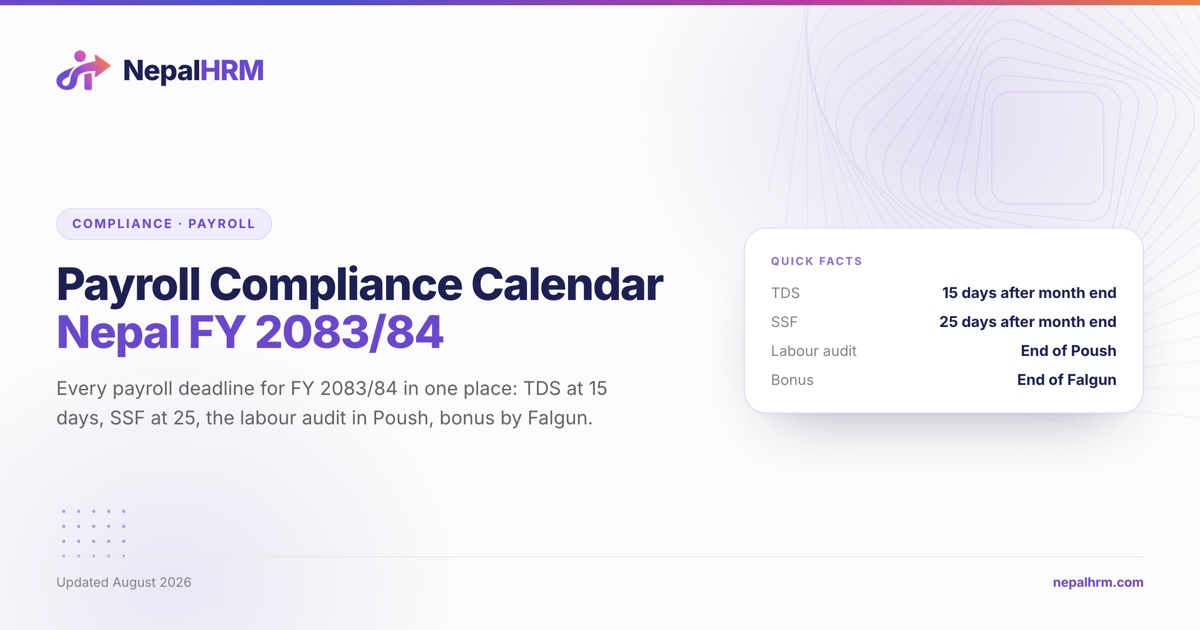
Every payroll deadline for FY 2083/84 in one place: TDS at 15 days, SSF at 25, the labour audit in Poush, bonus by Falgun, and the returns in between.
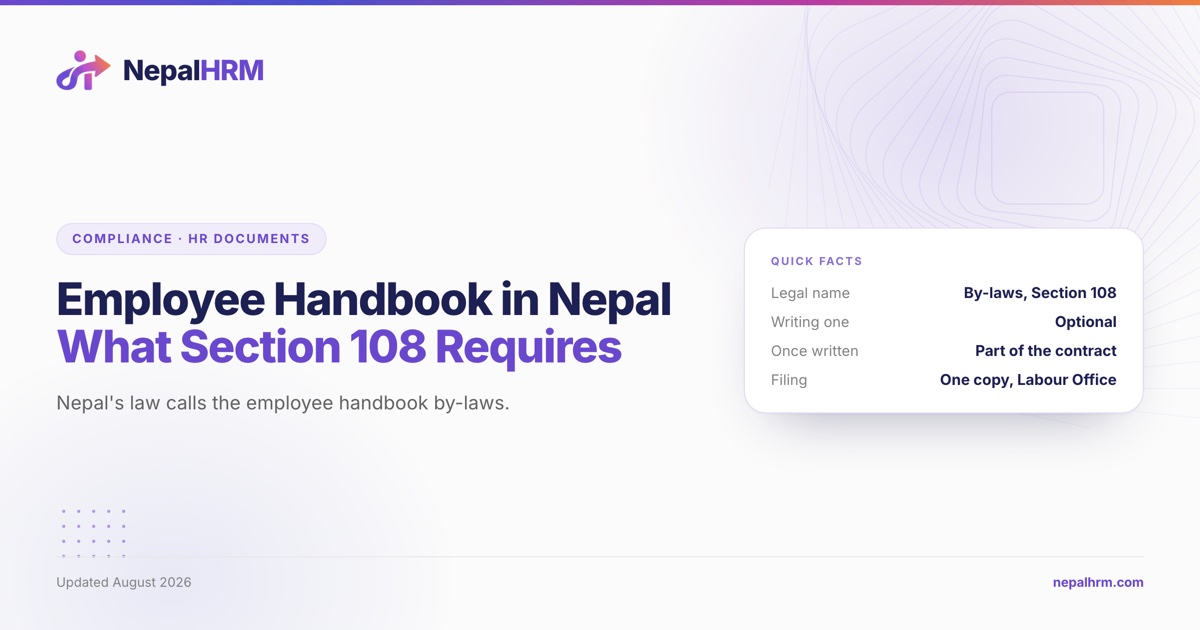
Nepal's law calls the employee handbook by-laws. Section 108 makes writing one optional and binding the moment you do. Five things you cannot do without one.
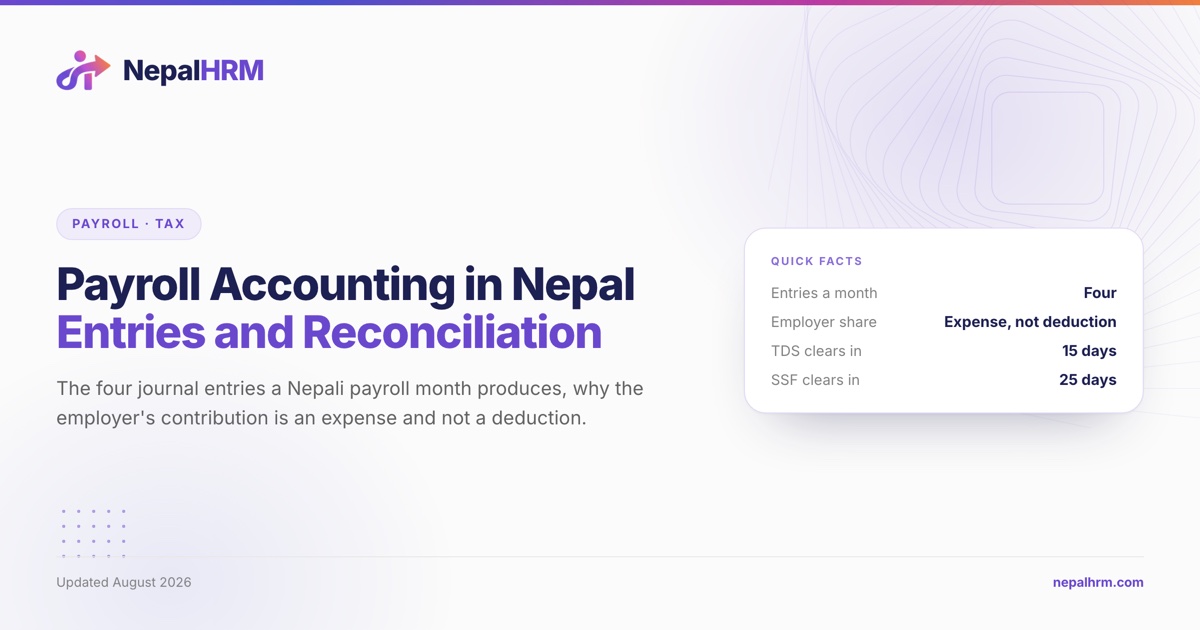
The four journal entries a Nepali payroll month produces, why the employer's contribution is an expense and not a deduction, and the three checks that catch errors.
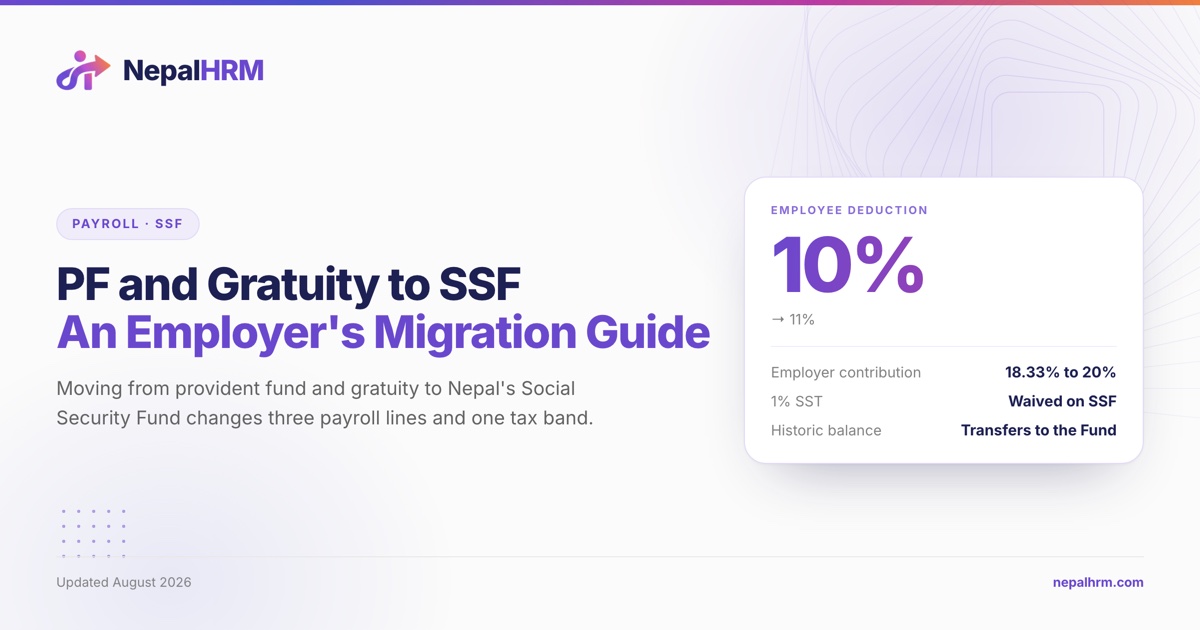
Moving from provident fund and gratuity to Nepal's Social Security Fund changes three payroll lines and one tax band. What it costs, with the numbers worked out.
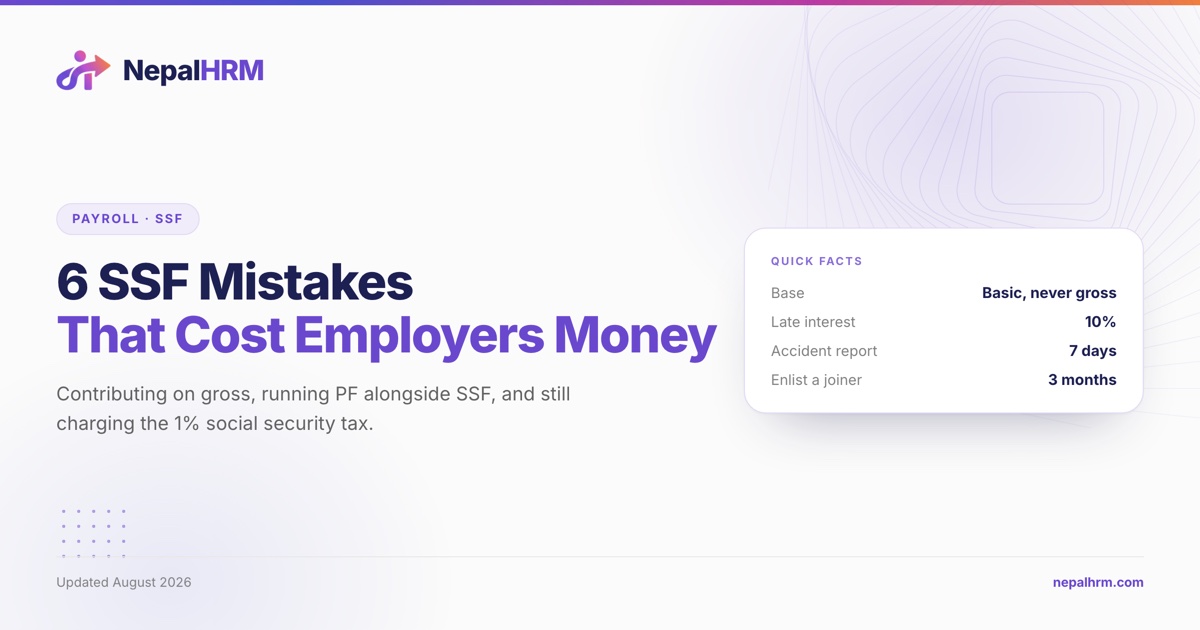
Contributing on gross, running PF alongside SSF, and still charging the 1% social security tax. Six SSF errors with the rupee cost of each one worked out.
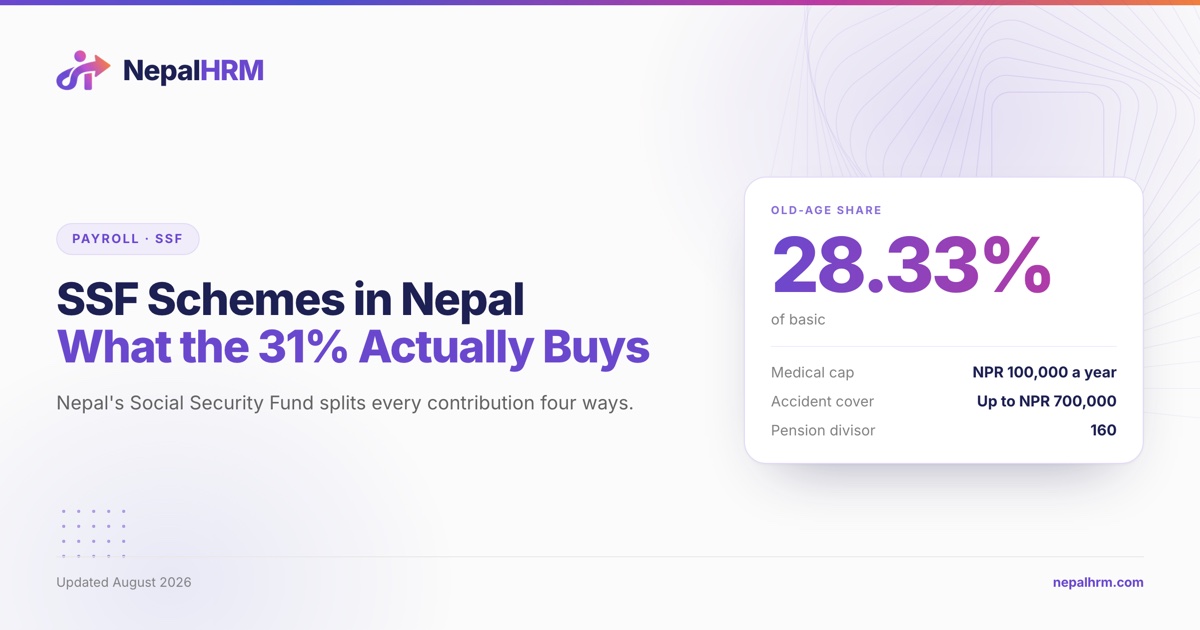
Nepal's Social Security Fund splits every contribution four ways. The medical caps, the accident cover, the dependent benefits, and the pension divisor of 160.
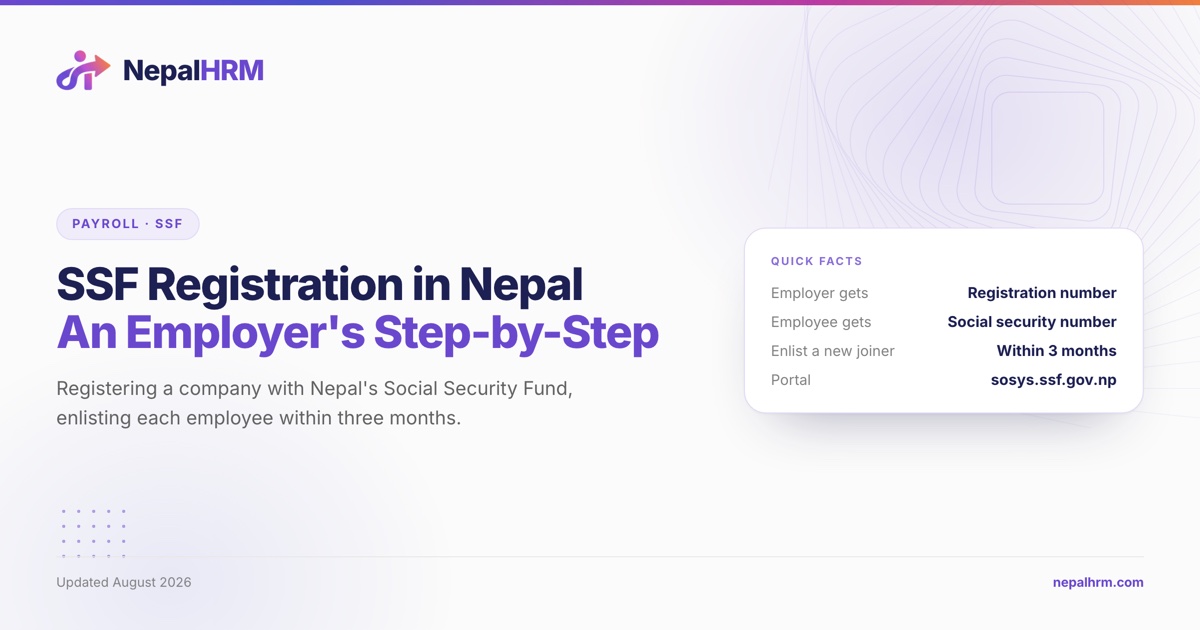
Registering a company with Nepal's Social Security Fund, enlisting each employee within three months, and what the Fund can do when neither has happened.
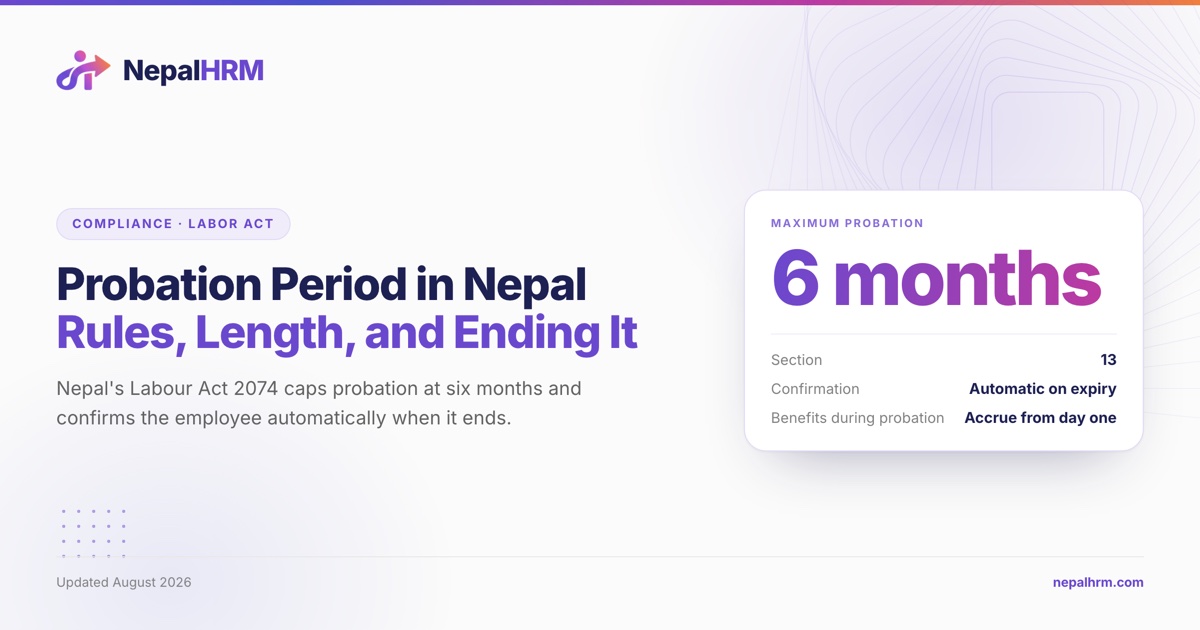
Nepal's Labour Act 2074 caps probation at six months and confirms the employee automatically when it ends. What Section 13 allows, and what it does not.
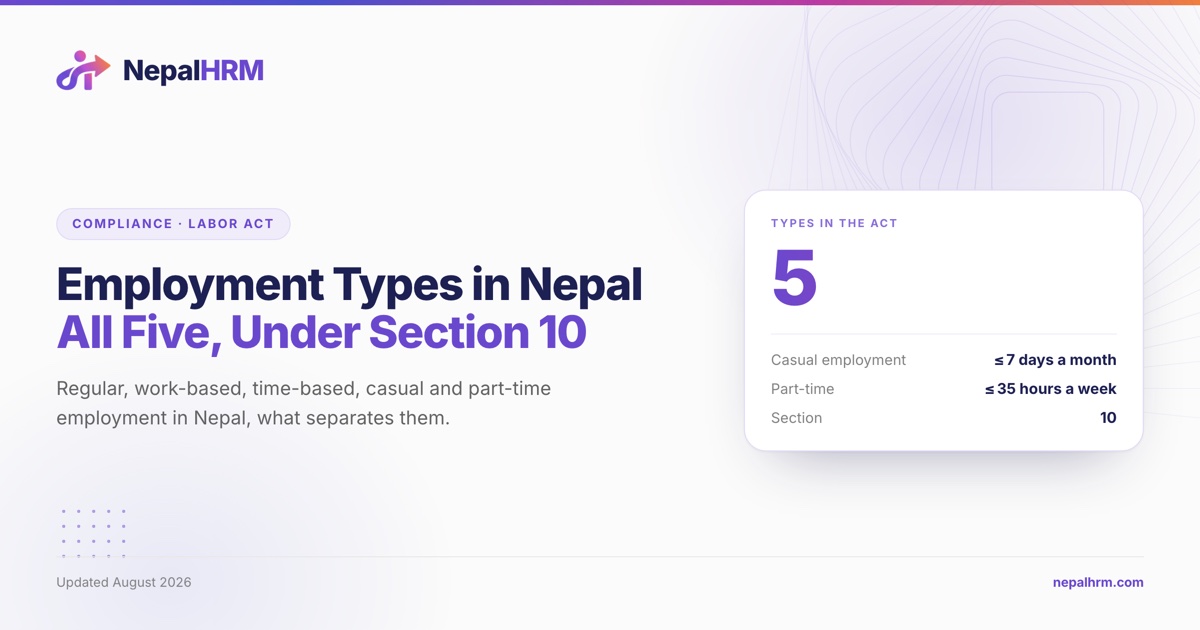
Regular, work-based, time-based, casual and part-time employment in Nepal, what separates them, and why the label in your contract does not decide the answer.
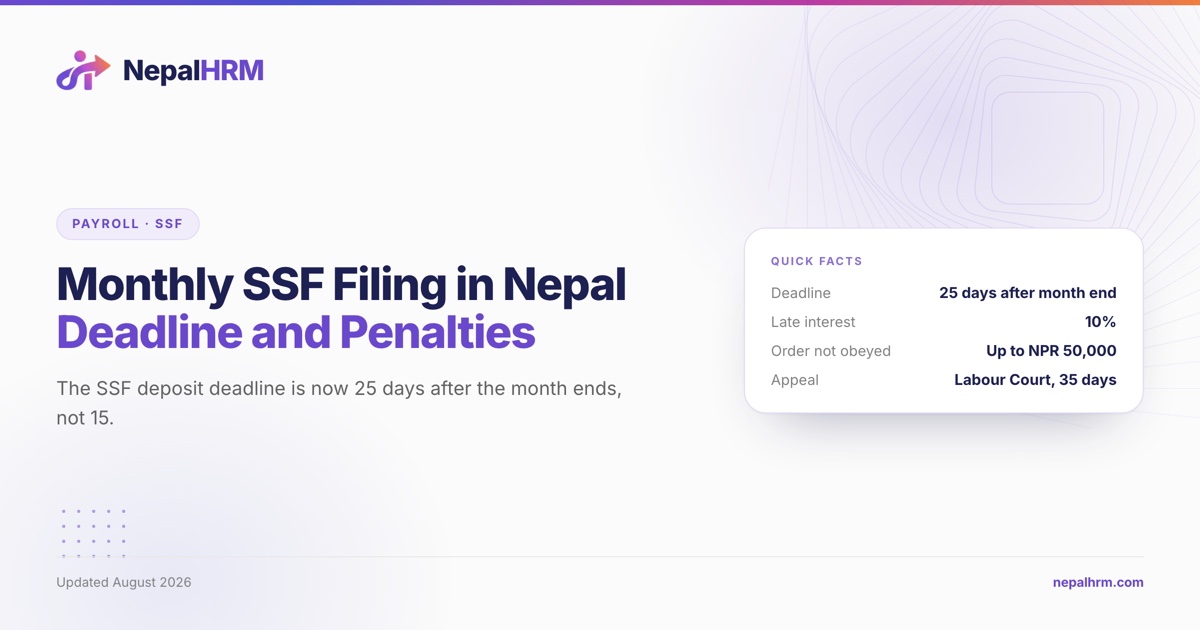
The SSF deposit deadline is now 25 days after the month ends, not 15. What the 2082 amendment changed, and what late payment costs an employer in Nepal.
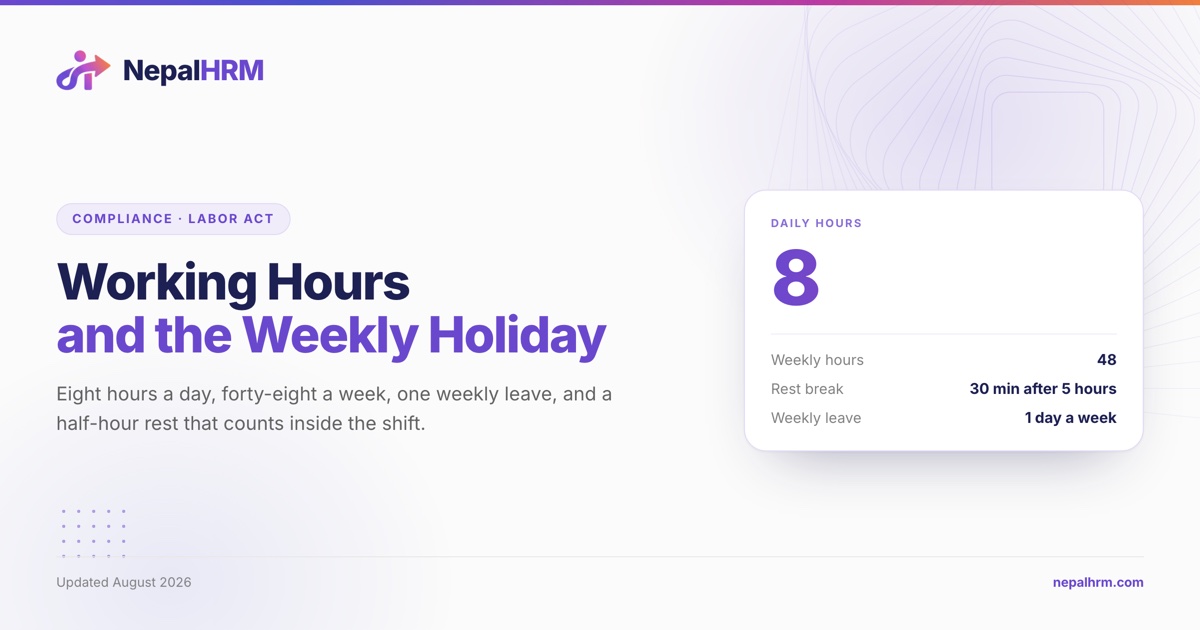
Eight hours a day, forty-eight a week, one weekly leave, and a half-hour rest that counts inside the shift. Sections 28 to 33 and 40 to 42, read properly.
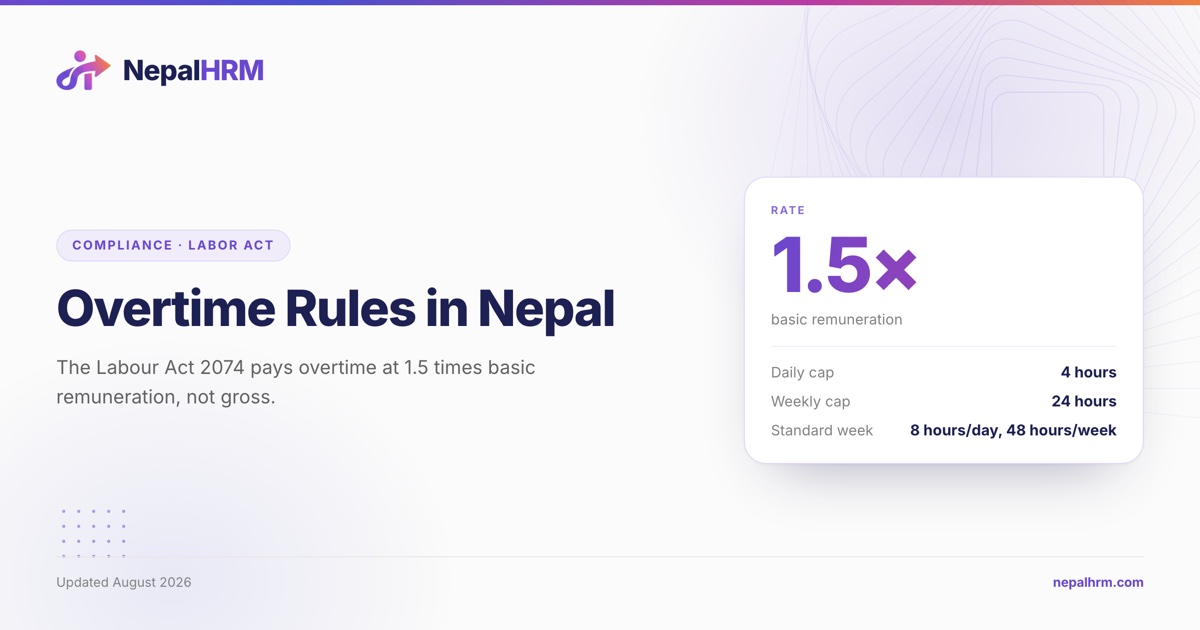
The Labour Act 2074 pays overtime at 1.5 times basic remuneration, not gross. Sections 28 to 31, the daily and weekly caps, and a worked example.
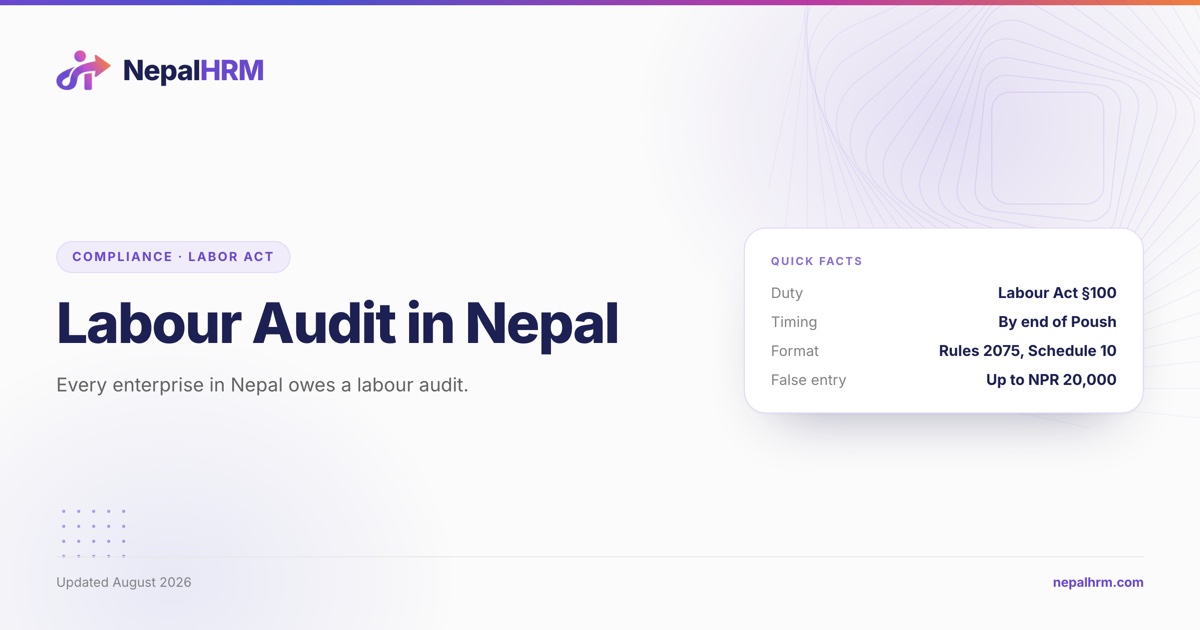
Every enterprise in Nepal owes a labour audit. Here is Schedule 10 of the Labour Rules 2075 in English, question by question, plus the deadline and the penalties.
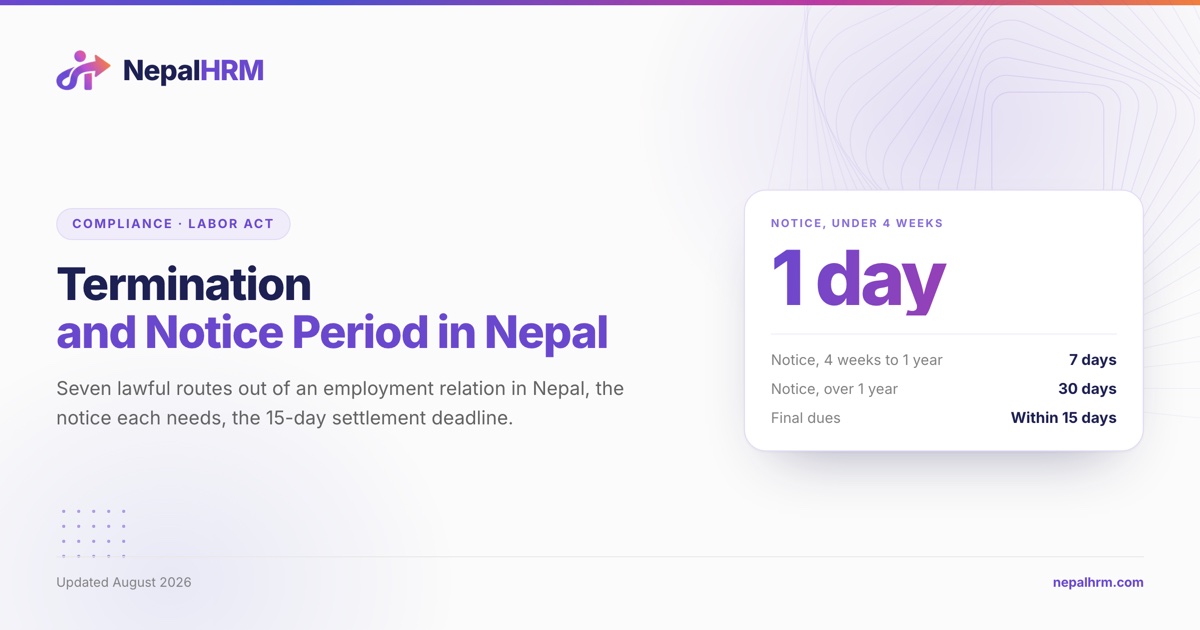
Seven lawful routes out of an employment relation in Nepal, the notice each needs, the 15-day settlement deadline, and the retrenchment compensation formula.
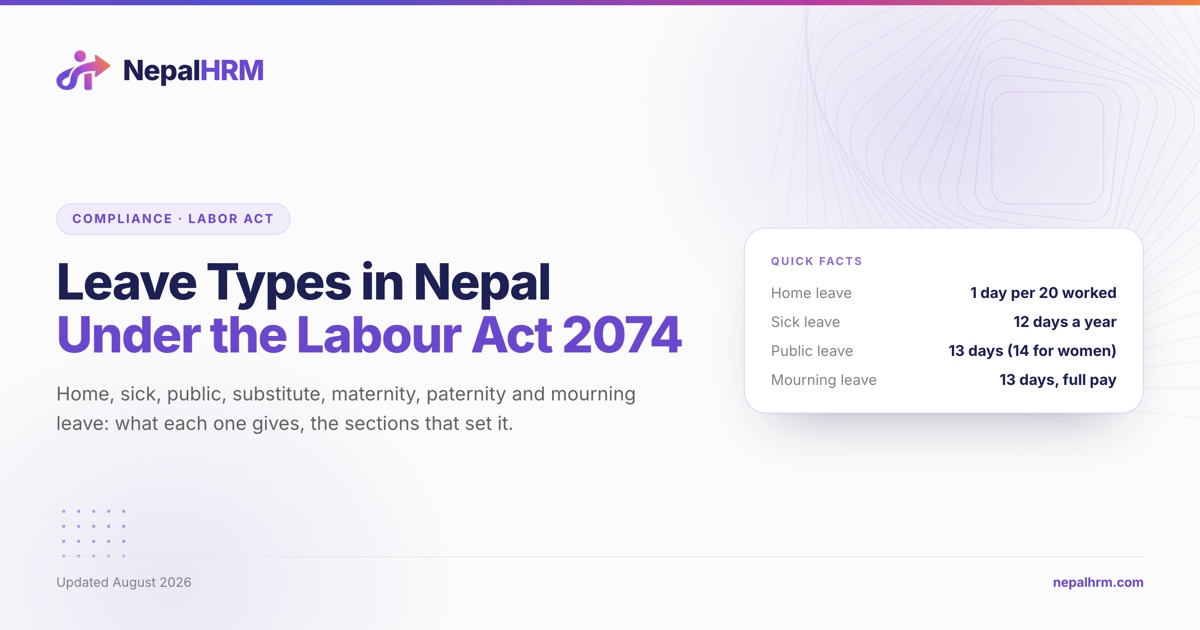
Home, sick, public, substitute, maternity, paternity and mourning leave: what each one gives, the sections that set it, and which leave an employer may refuse.
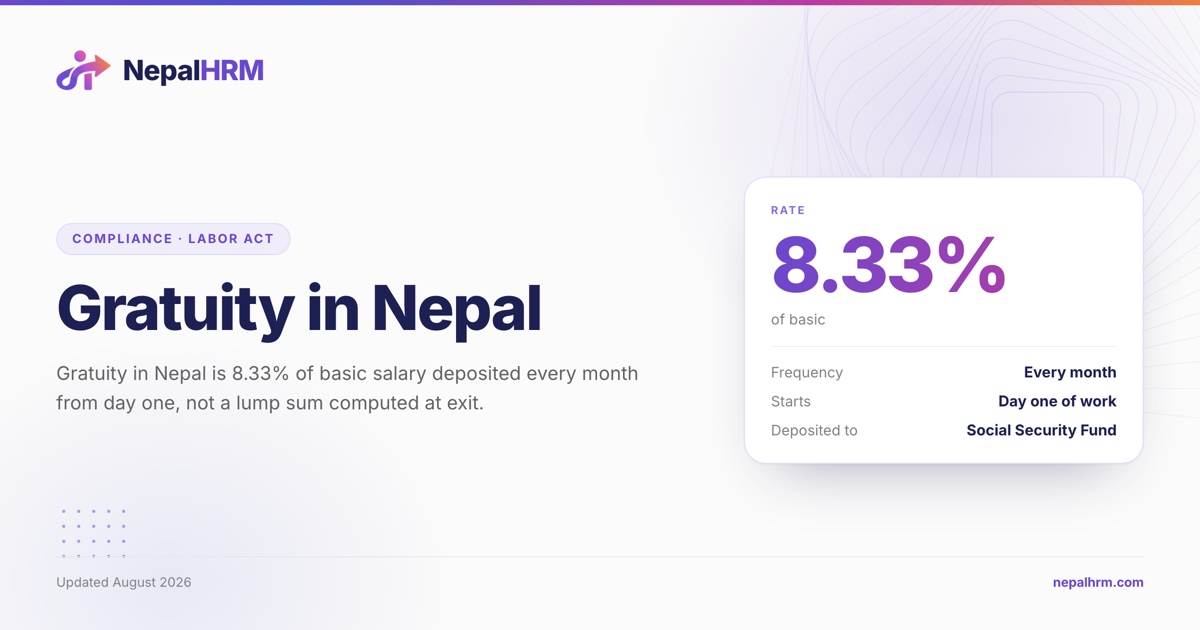
Gratuity in Nepal is 8.33% of basic salary deposited every month from day one, not a lump sum computed at exit. What the 2074 Act changed, and why it matters.
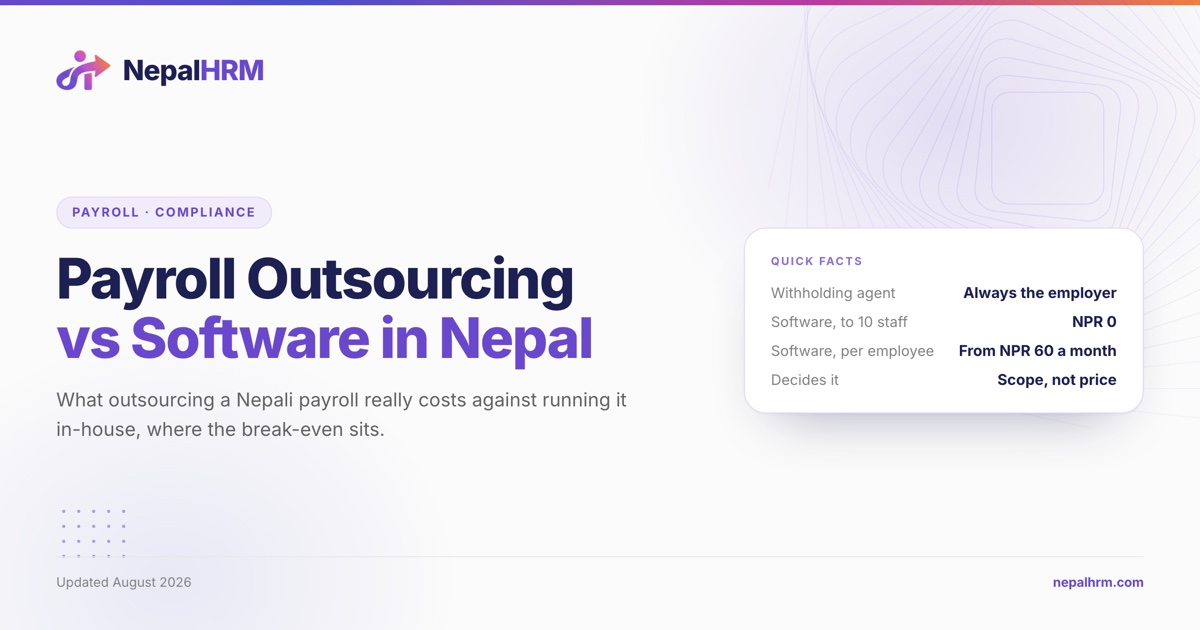
What outsourcing a Nepali payroll really costs against running it in-house, where the break-even sits, and the one liability outsourcing does not transfer.

Nepal's new fiscal year (FY 2083/84) starts on Shrawan 1, 2083 - around 17 July 2026 - and it brings a major income-tax change. Here is the step-by-step…
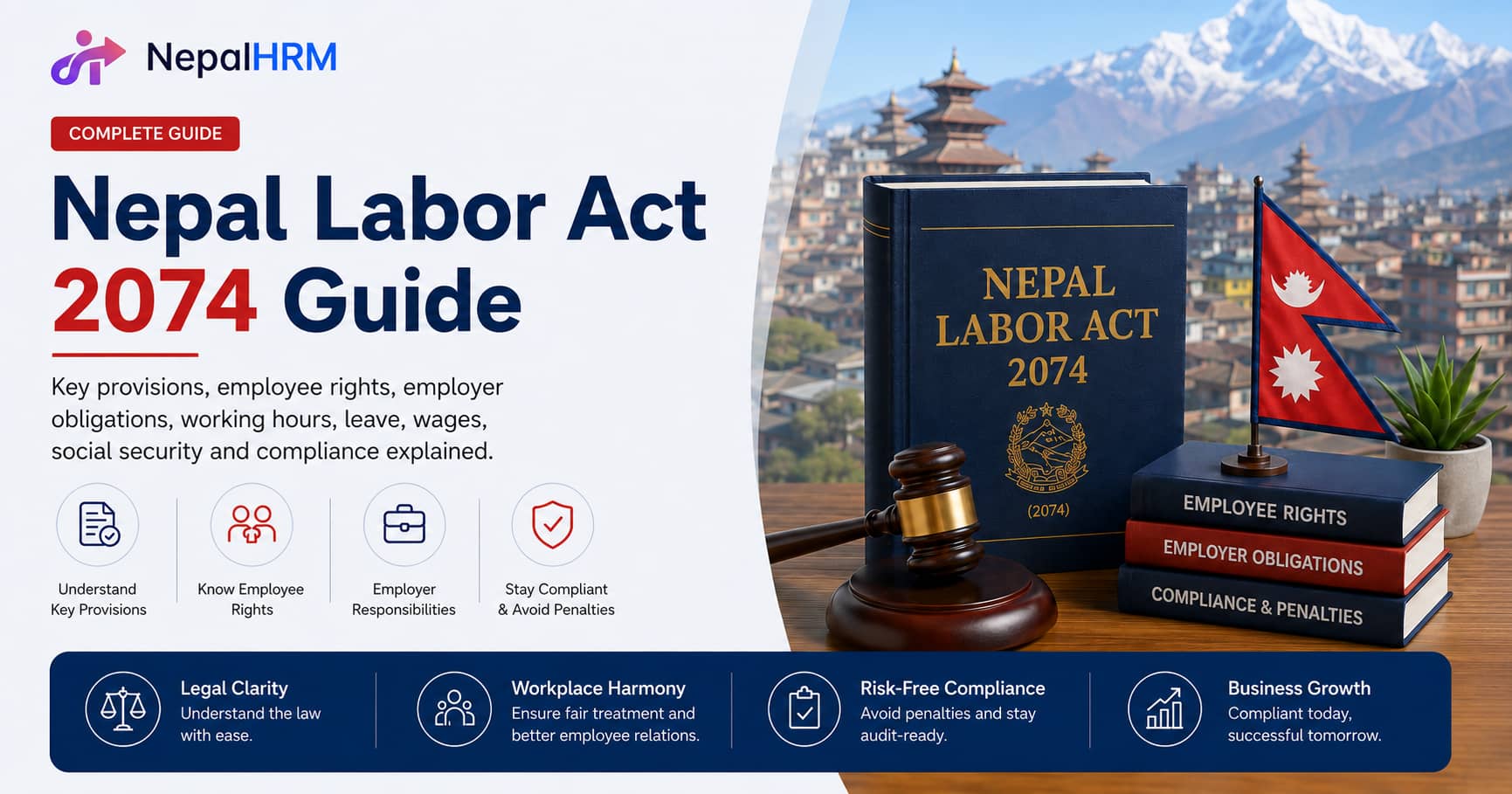
A practical, plain-English guide to the Nepal Labor Act 2074 - working hours, leave rules, minimum wage, SSF contributions, probation, and termination -…
A 30-minute walkthrough with your own headcount and salary structure answers more than another article. Or just start free and click around.